TellaMore: A Project I Believed In
Building a used-car inspection service, cutting the MVP down to essentials, and finding a more affordable acquisition channel.
Originally published in Russian on Facebook on April 28, 2015. Translated into English with the original screenshots. Market figures, prices, and observations below are historical and have not been updated.
After my last post about StrategoMania, I received a pile of messages from my dear fans. With the overwhelming success of three likes, I feel duty-bound to continue the series about my little projects.

The project
Despite what the name might suggest, TellaMore was not about love. The name was a play on “tell more.”
The idea came from a hypothesis: a standard inspection before buying a used car does not give the buyer a complete picture of its condition. The problems we wanted to address were the limited expertise of mechanics outside the major cities, and a lack of trust in the quality of service and expertise at authorized dealerships.
We introduced the term “smart inspection,” which we thought could help us position ourselves as pioneers with a new product.
Our pitch was:
TellaMore.ru: the first smart car inspection service. A personalized report on a car’s technical condition, identifying its specific faults and the cost of repairs.
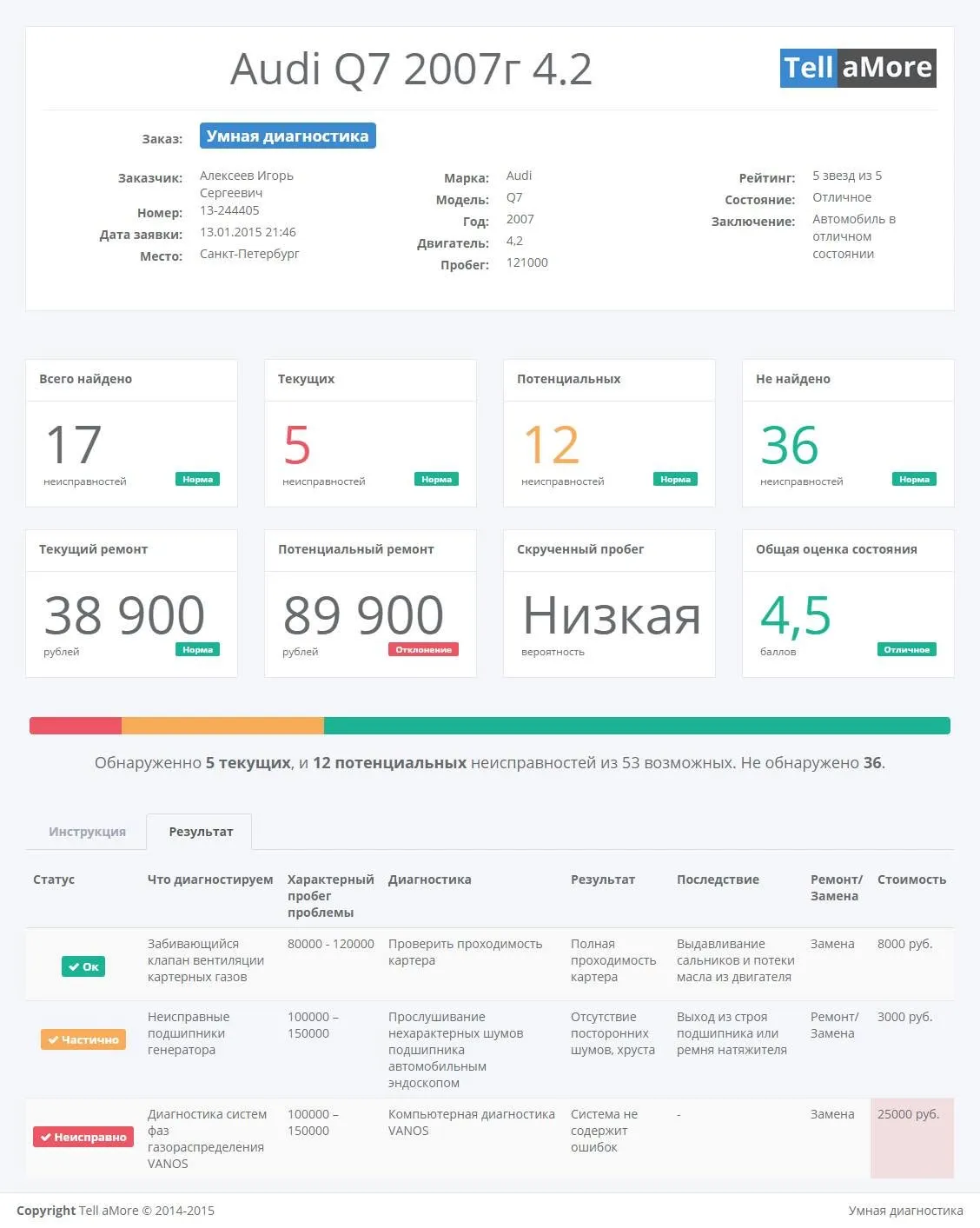
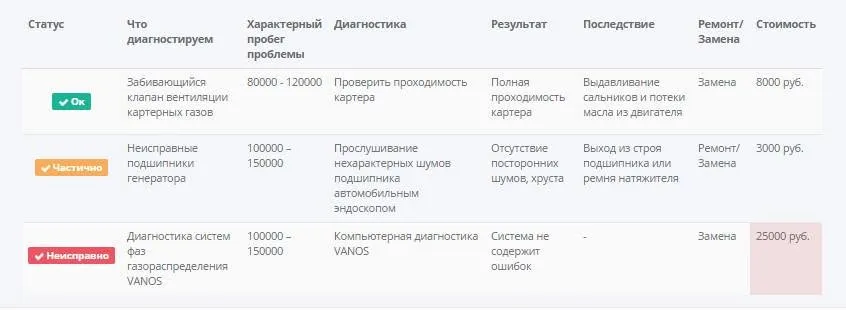
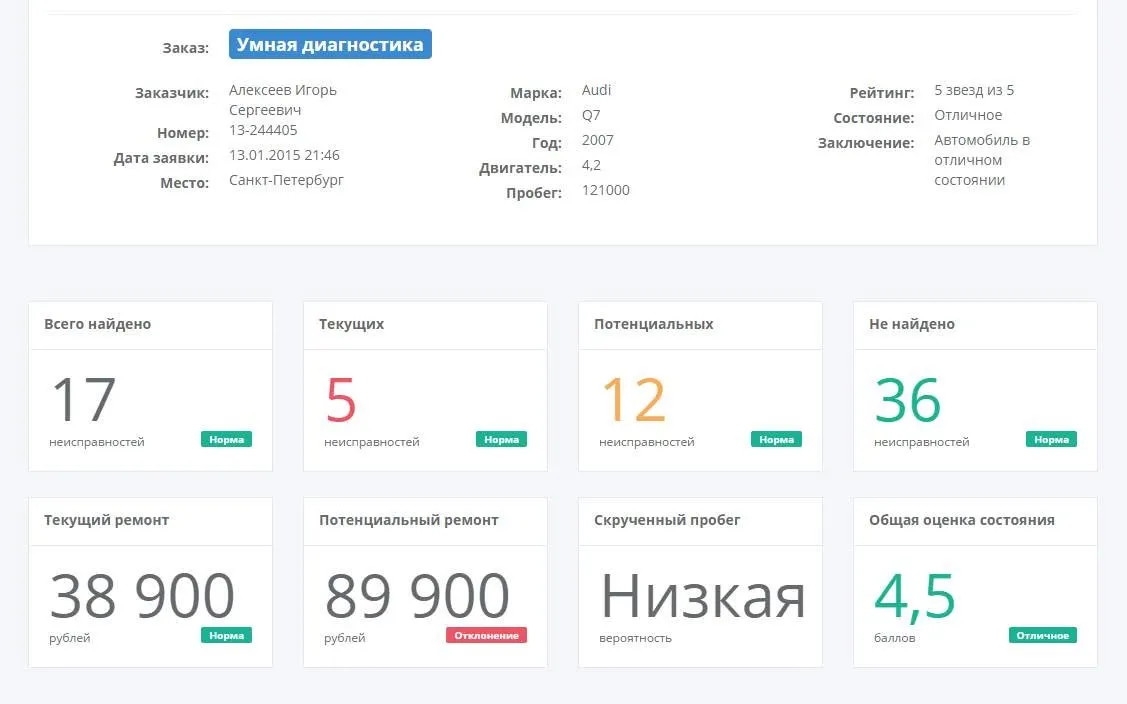
The product’s distinctive feature was our model-specific checklists. For mechanics, they provided clear instructions for finding common problems in a particular model at a particular mileage. For buyers, the report gave an overall assessment, compared the car’s condition with the problems typical at that mileage, and listed specific repair costs for the faults found.
How it worked
The buyer visited the website and entered details of the car they wanted to buy and the city where it needed to be inspected.
During the initial stage, while we were testing the idea, our service would find a mechanic in that city, send them the model-specific checklist with step-by-step instructions, arrange the inspection, and email the buyer the address and appointment time.
That was it. The buyer came to the workshop, waited for the inspection, and received a full report on the car: the faults found and what they would cost to repair.
Later, this was supposed to become a proper online dashboard. The mechanic would work through the checklist on an iPad or Android tablet, while the buyer drank coffee and watched the findings and repair costs appear in real time.
Positioning
We focused on three things. A smart inspection before buying a used car, followed by a report on its condition, could:
- Save the buyer money.
- Help avoid unpleasant surprises after the purchase.
- Provide solid evidence when negotiating the price with the seller.
The MVP
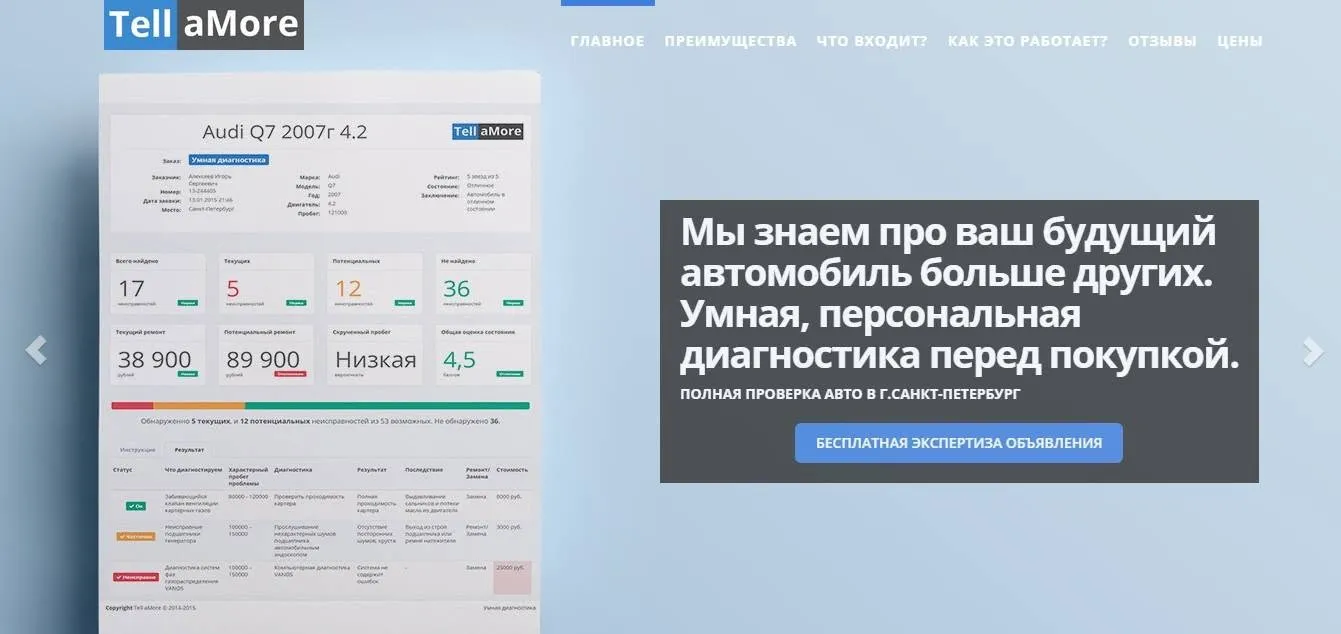
This time, the MVP had to be as minimal as possible: a landing page explaining the service in detail, plus a blog with short descriptions of inspection findings for popular used-car models to attract search traffic.
We needed to show a sample checklist and the report the buyer would receive. We also needed a main service package and a lead form with as few required fields as possible.
Later, to widen the sales funnel, we added two options:
- A simpler bodywork inspection for signs of accident damage.
- A free expert review of a car listing.
Having learned from the StrategoMania MVP, we cut a lot of unnecessary ideas. One was a make-and-model dropdown that would automatically fill in the engine and model year. Another was a calculator that would estimate potential repair costs for a chosen model, getting the buyer interested—or worried—enough to order a smart inspection.
All of that went in the bin.
The market
By all accounts, this was a new product in an existing market. The main task was to test whether it offered value to users.
I did not believe the articles saying that Russia’s used-car market was about to become more transparent and organized, following the example of Beepi in the West and similar Russian projects. That came from my own view of local attitudes and how the Russian car market worked. We might eventually get there, but I thought it would take years, perhaps more than five. That was my personal opinion.
We did some initial market research:
-
Russia’s used-car market in 2014 was 6.1 million vehicles. Demand for used cars exceeded demand for new ones. The crisis and sanctions appeared to work in our favor: our hypothesis was that the new-car market would fall harder than the used-car market. The total addressable market was not small. Thankfully, this was not a niche project. Two points in its favor.
-
Avito listings for cars under seven years old received more than a billion views in the first six months of 2014. Our conclusion was to limit the initial knowledge base to cars under seven years old. We treated this as our target market: the people most likely to want an inspection. Another point in the project’s favor.
-
Only 4% of used-car sales went through authorized dealerships; the other 96% were private sales. Another point for the project, and one for my hypothesis that a Russian Beepi was not around the corner. If such a model did take off, though, the potential was huge.
-
Around 36% of buyers used a service center to inspect a used car before buying it. The rest either did not inspect it or did it themselves. There was room for the market to grow. Another point in favor.
-
Where would you first turn for a used-car inspection? Many people would say an authorized dealership. When I was buying an Audi Q7 in Moscow, I called all the authorized dealers and found that the earliest available inspection was at least a week and a half away. I needed to buy the car the next day. I was sure that fewer than 30% of buyers would name an authorized dealer as their first choice, and outside the major cities that option often did not exist. For us, the conclusion was that the market had no leader. Another point for the project.
I am not listing the sources here because the post is already enormous. But we cross-checked the figures against different sources as best we could.
Hypotheses and acquisition channels
We chose several channels to test the hypothesis. Yandex Direct worked, but its overheated bids made customer acquisition too expensive for us. After spending a relatively small amount and realizing this, we dropped it.
AdWords was much the same. While we were setting up a campaign, a woman from Google called and pleasantly explained that she would love to be our personal account manager because she had fallen in love with the project and the landing page.
A word of advice: if someone introduces themselves as a Google employee and compliments your project and landing page, giving your ego a good stroke, be careful. It is not necessarily good for the project.
After googling the offer, I found that it was not unique at all and that its effectiveness was questionable. I had to resist the flattery, but we decided to decline.
After some thought, we found a channel that brought a targeted visitor to the site for 5 rubles, instead of the 120 we had been paying through Yandex and Google.
We decided not to test more channels for the moment. This one was the best available option, so we focused on how it worked with the landing page. Conversion was weak. We reworked the landing page and tested hypotheses.
First, we stopped advertising for all cars and focused on foreign makes. Later, we narrowed that further to German cars. User behavior showed us that, given the product and its price, we needed a more clearly defined audience.
Conversion improved, and the project recouped its costs four months after we started working on it.
Maybe to be continued.